Are oatmeals really heart healthy?
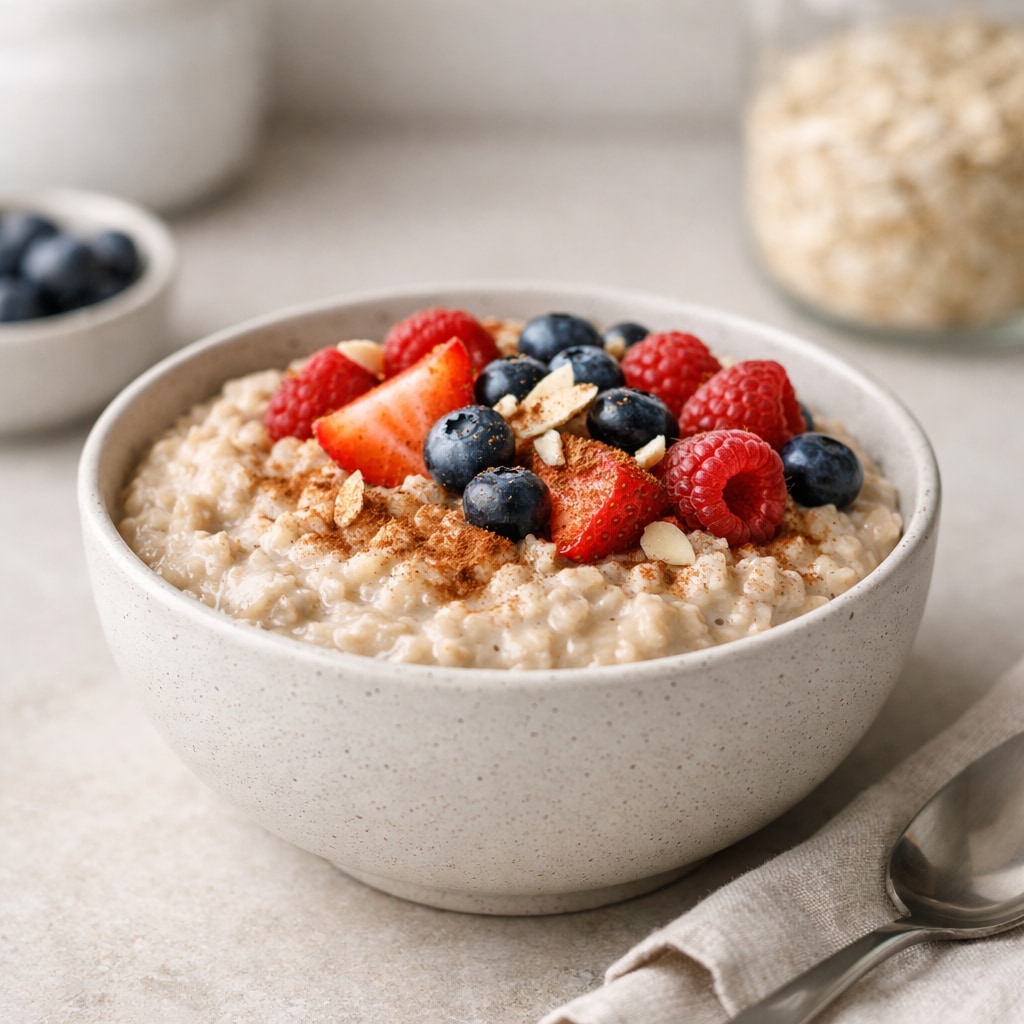
The “Oatmeal Isn't Healthy” Claim: Mostly Wrong… But Sometimes True
You might have heard two opposite takes: “Oatmeal is a heart-healthy superfood” or “Oatmeal is basically sugar — causes blood sugar spikes and affects cholesterol and plaque.”
Actually, the real answer is in the details.
Plain oats are a minimally processed whole grain that naturally contains a specific soluble fiber called beta-glucan. In controlled trials, beta-glucan from oats consistently lowers LDL cholesterol, one of the drivers of plaque buildup in arteries.
But the claim that “oatmeal isn't healthy” isn't entirely wrong either, because many people don't eat plain oats. They eat sweetened instant packets, oversized portions, or “oatmeal” that becomes a dessert bowl (honey + dried fruit + granola + chocolate chips). That version can push blood sugar up quickly — especially if you're sedentary or already insulin resistant. So instead of labeling oatmeal as “good” or “bad,” ask a better question: how do you prepare it, are you eating ready-packaged oats, or consuming large quantities while living a sedentary lifestyle?
Why Oats Got Their Heart-Healthy Reputation
Oats can support healthier cholesterol numbers.
A large meta-analysis of randomized controlled trials found that adding at least 3 g/day of oat beta-glucan lowered LDL and total cholesterol (without meaningful changes in HDL or triglycerides). In that analysis, LDL fell by about 0.25 mmol/L (roughly 10 mg/dL).
Regulators also recognize this relationship.
U.S. health-claim rules for soluble fiber from certain foods reference a daily intake of beta-glucan from whole oats (or barley) as part of a diet low in saturated fat and cholesterol.
Oats can improve post-meal blood sugar response — but processing matters.
Not all oats behave the same in your body. A systematic review found that more processed oat products (smaller particle size and more gelatinized starch) tend to produce a higher glycemic response than less processed forms. In practical terms: steel-cut and large-flake rolled oats generally behave more “slow and steady,” while quick and instant oats can act faster.
Quick vs. Rolled vs. Steel-Cut vs. Instant: What's the Real Difference?
All oats start as “groats” (whole oat kernels). From there, they're cut or rolled into different shapes to change texture and cooking time. Quaker's plain-language breakdown is a helpful summary:
Steel-cut oats: groats chopped into pieces; chewy texture; longer cook time.
Old fashioned / rolled oats: groats steamed and rolled into flakes; cook in about 5–10 minutes.
Quick oats: rolled thinner (often cut smaller); cook faster.
Instant oats: thinnest and most finely cut; “just add water” style; cooks fastest.
The key physiology point: the more the oats are processed and broken down, the faster digestion tends to be — and the faster blood sugar may rise. If blood sugar stability is a top goal, steel-cut or rolled oats are usually an easier starting point. If convenience is your top goal, instant oats can still work, but the ingredients and add-ins matter most.
The Real “Oatmeal Problem” for Plaque Prevention: Added Sugar + Insulin Resistance
Plaque risk isn't driven by one food. It's multifactorial and driven by your overall pattern: LDL exposure over time, blood pressure, smoking status, inflammation, sleep, stress, and insulin resistance/metabolic syndrome.
Added sugar matters for cardiometabolic health. Recommendations from the World Health Organization (WHO) recommend keeping added sugars under 10% of total calories. The American Heart Association (AHA) suggests that a practical limit is about 25 g/day of added sugar for women and 36 g/day for men.
How to Make Oatmeal and Actually Turn Oats Into a Balanced Meal, Not a Sugar Bowl?
Choose a smarter base: plain rolled/old fashioned oats or steel-cut oats.
Try to avoid using instant oats; choose plain whenever possible and add your own flavor (cinnamon, berries, nuts). “Reduced sugar” packets can be an upgrade from classic sweetened packets, but it's still worth reading the label.
Simple rule: the shorter the ingredient list, the fewer “surprise sugars.”
Keep the portion realistic; it's easy to turn oats into a very large carbohydrate load without realizing it. A regular portion size is 1/2 cup dry oats.
Add protein; slow down digestion and additionally get macronutrients your body needs.
Pairing carbohydrate with protein can help satiety and prevent instant blood sugar spikes. Some helpful options:
- Greek yogurt or Skyr stirred in after cooking
- Cottage cheese (surprisingly good)
- Whey or plant protein mixed in (add last)
- Two eggs on the side (or savory oats + eggs)
Add fiber + healthy fats. They help digest slowly and support steady energy.
- Chia seeds or ground flax
- Walnuts/almonds
- Nut butter (think 1 tablespoon, not half the jar)
- Berries (fiber + polyphenols)
Use flavor without turning it into dessert. Try adding: cinnamon, vanilla, cocoa, frozen berries, and salt (it boosts flavor so you need less sugar). Try to limit added sugar like industrial honey, brown sugar, and “granola on top” (often adds more sugar/oils than people expect).
Lastly, there are not necessarily good or bad foods; however, what is the context? Are you an active individual, prepping your own meals, limiting portion size, using minimally processed products, etc.? Or are you already at excess body weight, sedentary in lifestyle, adding dried fruits and honey, and not watching your portion size? Two different scenarios and different outcomes.
So instead of making big “claims,” look at your individual needs and current health state. Consuming whole foods, in a variety, getting enough fiber, micro- and macronutrients, and regular exercise or being active — and ideally being in community, not in isolation — can help you achieve better heart health and become a better human being overall.
References:
Whitehead A, Beck EJ, Tosh S, Wolever TMS. Cholesterol-lowering effects of oat β-glucan: a meta-analysis of randomized controlled trials. Am J Clin Nutr. 2014;100(6):1413-1421. doi:10.3945/ajcn.114.086108.
U.S. Electronic Code of Federal Regulations. 21 CFR §101.81: Health claims: Soluble fiber from certain foods and risk of coronary heart disease. Accessed February 9, 2026. https://www.ecfr.gov/current/title-21/chapter-I/subchapter-B/part-101/subpart-E/section-101.81
Tosh SM, Chu YF. Systematic review of the effect of processing of whole-grain oat cereals on glycaemic response. Br J Nutr. 2015;114(8):1256-1262. doi:10.1017/S0007114515002895.
Engeroff T, Groneberg DA, Wilke J. After Dinner Rest a While, After Supper Walk a Mile? A systematic review with meta-analysis on the acute postprandial glycemic response to exercise before and after meal ingestion in healthy subjects and patients with impaired glucose tolerance. Sports Med. 2023;53(4):849-869. doi:10.1007/s40279-022-01808-7.
Hashimoto K, Dora K, Murakami Y, et al. Positive impact of a 10-min walk immediately after glucose intake on postprandial glucose levels. Sci Rep. 2025;15:22662. doi:10.1038/s41598-025-07312-y.
World Health Organization. Reducing free sugars intake in adults to reduce the risk of noncommunicable diseases (WHO ELENA). Accessed February 9, 2026. https://www.who.int/tools/elena/interventions/free-sugars-adults-ncds
American Heart Association. How Much Sugar Is Too Much? Updated September 23, 2024. Accessed February 9, 2026. https://www.heart.org/en/healthy-living/healthy-eating/eat-smart/sugar/how-much-sugar-is-too-much
Lane MM, Gamage E, Du S, et al. Ultra-processed food exposure and adverse health outcomes: umbrella review of epidemiological meta-analyses. BMJ. 2024;384:e077310. doi:10.1136/bmj-2023-077310.
Williams PG. The benefits of breakfast cereal consumption: a systematic review of the evidence base. Adv Nutr. 2014;5(Suppl 3):636S-673S. doi:10.3945/an.114.006247.
Zhang L, Ma C, Huang H, et al. Association of unsweetened and sweetened cereal consumption with all-cause and cause-specific mortality: a large prospective population-based cohort study. Food Funct. 2024;15:10151-10162. doi:10.1039/D4FO03761H.
Lin Z, Zeng M, Sui Z, et al. Associations of breakfast cereal consumption with all-cause and cause-specific mortality: a large-scale prospective analysis. Nutr J. 2025;24(1):48. doi:10.1186/s12937-025-01109-5.
Quaker Oats. The Difference Between Our Oats. Accessed February 9, 2026. https://www.quakeroats.com/oats-do-more/why-oats/the-difference-between-our-oats