No Soil, Still Growing
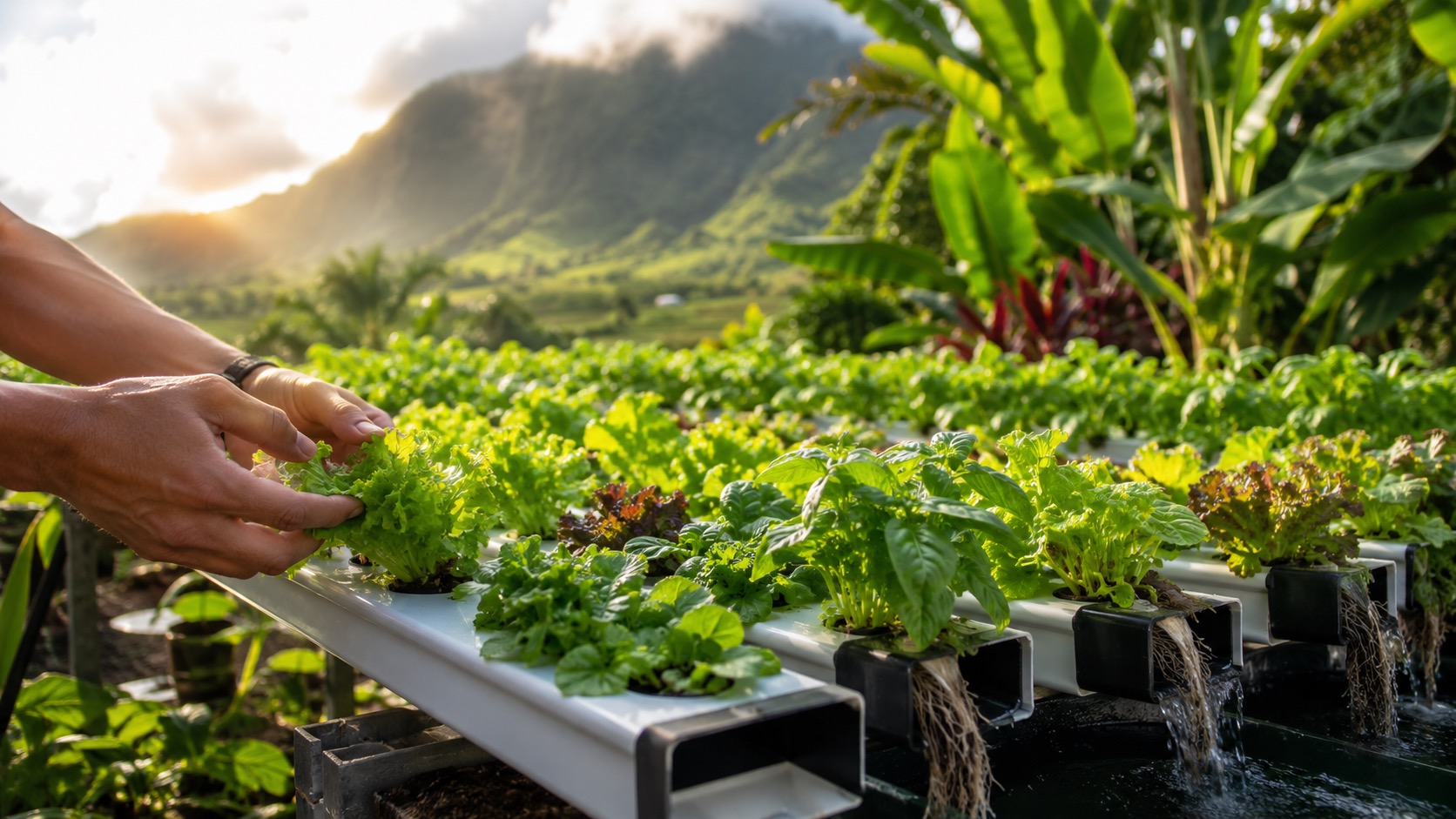
What hydroponic gardening can teach us about food, health, and starting again.
There is something wonderfully fitting about talking about hydroponic gardening on Kauai, the Garden Island. Here, and throughout Hawaii, growth is everywhere. It climbs mountains, spills over fences, blooms along roadsides, and returns almost overnight after a good rain. When most of us picture gardening in Hawaii, we picture soil: hands in the dirt, getting muddy, our pickings on the lanai, and hopefully the quiet satisfaction of picking something we helped grow.
Hydroponic gardening gently challenges that picture.
Hydroponics is the practice of growing plants without soil. Instead of anchoring roots in the ground, a hydroponic system gives plants water, oxygen, light, and dissolved nutrients in a managed environment. It can be simple or technical, small enough for a kitchen counter or large enough for a farm. But the main idea is beautiful and simple: no soil, but still growing.
At first, that sounds almost impossible. How can something grow without the very thing we have always believed it needs? That is exactly why I love it. Hydroponics reminds us that growth is not always about perfect conditions. Growth is about the right support.
Soil is one way to deliver what plants need. But really plants need nutrients, hydration, oxygen, light, structure, and consistency. And humans are not so different. We often wait for perfect circumstances before taking care of ourselves. We say we will exercise when work slows down. We will cook more when the schedule gets easier. We will drink more water when we get organized. We will sleep when stress disappears. But life rarely gives us perfect conditions — you plan to get outside but it may rain, you commit to a routine, your schedule may shift. If we wait for perfect, we may wait a long time. Like plants, we need the right inputs repeated consistently: nourishing food, enough protein, colorful plants, water, movement, strength, sunlight, sleep, laughter, connection, and purpose. None of these has to be perfect. They just need to show up often enough to support life.
A hydroponic garden also teaches patience. The first batch may grow beautifully. The second may struggle. The third may require detective work. Maybe the water level dropped. Maybe the nutrients were too strong or too weak. Maybe the roots needed more oxygen. Maybe the lettuce got too much heat. Maybe algae moved in because sunlight was hitting the reservoir.
Isn't that how health habits work?
We begin with excitement. We buy the groceries. We join the gym. We start walking. We fill the water bottle. Then life shifts, energy dips, progress slows, and the habit that once felt exciting asks for patience and problem-solving.
That moment is not always failure. Sometimes it is feedback. A struggling plant is not a bad plant. It is a plant asking for a better environment. A tired body is not a failed body. It is a body asking for recovery. A plateau is not the end of progress. It is information.
A garden does not grow because we shame it into growing. It grows because we observe, adjust, and care for it. Our bodies deserve the same respect.
If you are curious about hydroponics, start small. Grow something you will actually eat. Basil, mint, green onions, bok choy, kale, Swiss chard, parsley, cilantro, and leafy greens are forgiving beginner choices. Lettuce can do well, though in warmer conditions it may prefer morning light, partial shade, or an indoor setup with bright light. Fruiting crops like tomatoes, cucumbers, peppers, and strawberries are possible too, but they usually require more light, support, and attention.
For Kauai beginners, a few simple tips help: use food-grade containers, choose nutrients made for hydroponics, keep water reservoirs covered to discourage algae and mosquitoes, check water levels often, give roots oxygen, clean the system between plantings, and harvest herbs and greens regularly. Most important, keep notes. Write down what you planted, where it grew, and what worked. That tiny garden journal turns frustration into learning. The same is true for health. When we notice sleep, food, movement, mood, and recovery without judgment, we begin to see patterns. We stop guessing and start adjusting. Maybe the leaves need more light. Maybe the roots need oxygen. Maybe your meals need more protein. Maybe your body needs more sleep. Maybe the better habit is not bigger, but smaller and more consistent.
Small does not mean insignificant. A few herbs can change how someone cooks. A short daily walk can change energy. A simple strength routine can change confidence. A plate with protein and vegetables can change the day.
In Hawaii, growth in nature is easy to see. Hydroponics reminds us of something deeper: even without soil, life can grow when it receives what it needs. We may not always feel rooted. We may not always know exactly what we are doing. But with nourishment, support, patience, and the willingness to adjust, we can still grow.