Why Protein Is Having a Comeback — Especially After 40
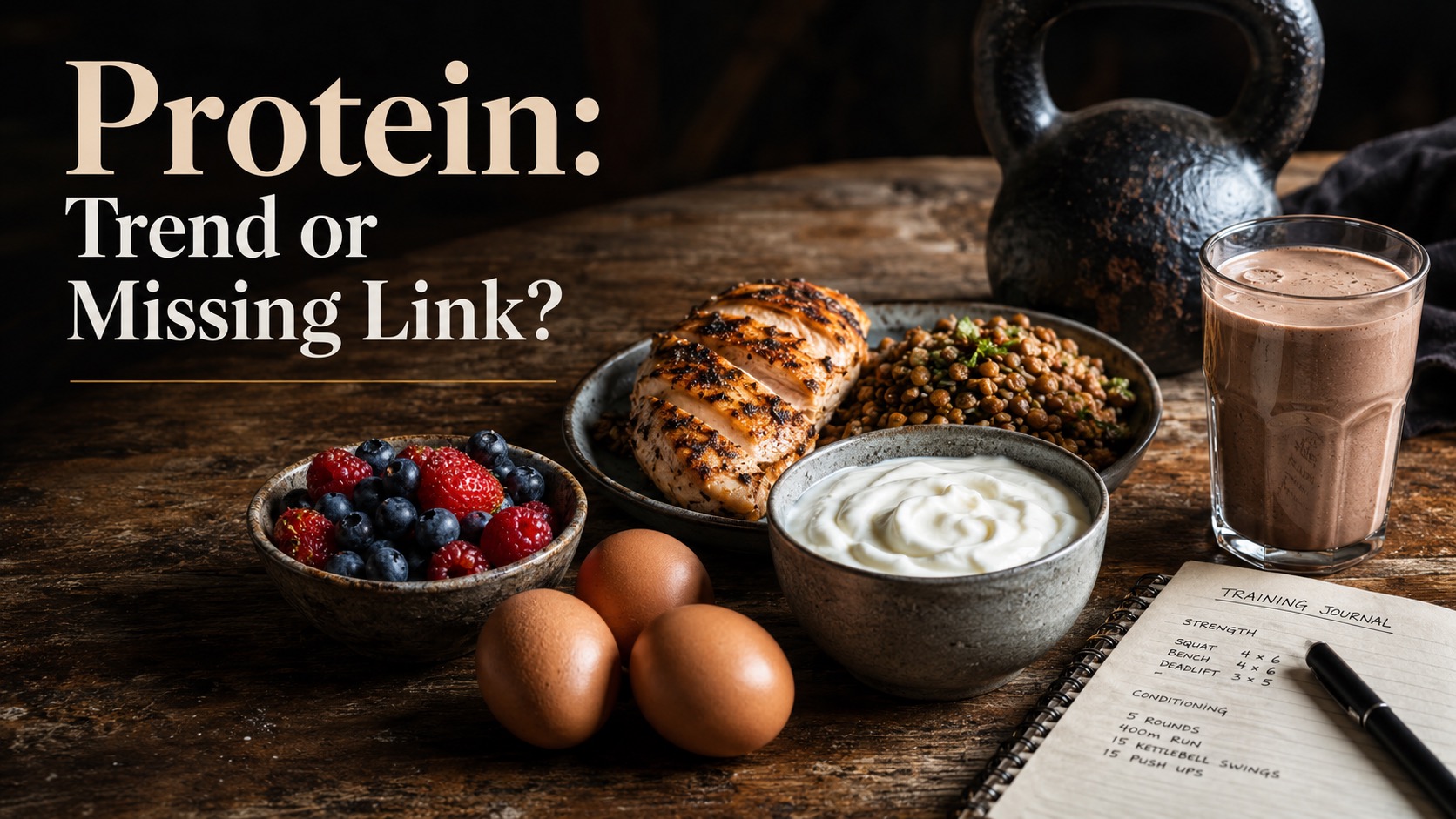
For years, nutrition conversations were dominated by what to remove. Less fat, less carbs, less sugar, less snacking. Less this, less that. But lately, one of the most useful shifts in nutrition is not about what people are cutting out. It is about what many of us are finally making sure we get enough of: protein.
Protein is not a fad nutrient. It has always mattered. But it is getting more attention now because more people are beginning to understand what happens when intake stays too low for too long, especially in midlife and older adulthood. Low protein intake can make it harder to maintain muscle, recover from exercise, preserve strength, stay satisfied between meals, and support healthy aging.
That matters more than many people realize.
When most people hear about consuming protein, they think of gym culture. Protein shakes, endless meals of chicken breast, maybe bodybuilding. But the real role of protein is much more basic and much more important. Protein provides amino acids, which the body uses to build and repair tissue, support muscle, make enzymes and hormones, and maintain many systems that keep us functioning well. This becomes especially relevant after about age forty, and even more so as people move into their fifties, sixties, and beyond. With aging, the body becomes less responsive to smaller doses of protein and muscle is easier to lose during inactivity, illness, high stress, or under-eating. That gradual loss of muscle is not just a sports issue. It affects metabolism, stability, recovery, and independence.
That is why several expert groups have suggested that healthy older adults may benefit from protein intakes above the basic minimum used to prevent deficiency. The older “RDA only” mindset is often not enough for people who want to preserve strength and function. Guidance from groups such as PROT-AGE and ESPEN has emphasized roughly 1.0 to 1.2 grams of protein per kilogram of body weight per day for many healthy older adults, with higher needs in some active or clinical populations.
This does not mean everyone needs a high-protein obsession. But it does mean we should stop treating protein like a side detail.
In real life, many people eat very little protein earlier in the day, then try to catch up at dinner. Breakfast might be toast and fruit. Lunch might be a salad with hardly any substantial protein. Then dinner becomes the one real protein meal. That pattern is common, but it often leaves people under-supported for most of the day.
A more helpful approach is distribution. Instead of putting nearly all protein at night, aim to include a meaningful amount at each meal. That could look like eggs and Greek yogurt in the morning, fish or chicken with lunch, beans or lentils in a grain bowl, cottage cheese as a snack, tofu in a stir-fry, or a more balanced smoothie that actually contains enough protein to count.
Protein also matters for appetite. People often feel more satisfied and less likely to keep hunting for snacks one hour later if the meal contains enough protein. That does not mean protein is magic, but it can make balanced eating easier because it adds structure to a meal.
At the same time, strength training is getting more and more popular and protein and strength work together. Resistance training gives the body a reason to keep and build muscle. Protein gives it some of the raw material to do so. Neither one works as well alone. When both are present, especially consistently over time, the effect is much more meaningful.
This is important for women too, particularly in midlife when hormonal changes, lower overall intake, under-fueling, or years of “light eating” can quietly reduce muscle reserves. Many women do not need less food, they need better-composed food — including enough protein and enough total nourishment to support training, recovery, and bone health.
Of course, context still matters. Protein needs are not identical for everyone. An individual with kidney disease, appetite issues, medications, chewing problems, food access, or digestive concerns may need to approach intake differently. That is one reason that individualized advice can help. But for many generally healthy adults, the bigger problem is not too much protein, it is not noticing how little they are actually getting.
The answer is not to make every meal rigid or joyless. Instead, simply to look at the plate and ask whether there is a real protein source there. Not a sprinkle. Not a tiny amount. A real whole-food source.
This may be one of the most useful nutrition upgrades we can make because it supports more than body composition. It supports energy, function, resilience, and aging well.
References
Volkert D, et al. ESPEN practical guideline: Clinical nutrition and hydration in geriatrics. Clinical Nutrition. 2022. https://www.espen.org/files/ESPEN-Guidelines/ESPEN_practical_guideline_Clinical_nutrition_and_hydration_in_geriatrics.pdf
Bauer J, et al. Evidence-based recommendations for optimal dietary protein intake in older people: a position paper from the PROT-AGE Study Group. 2013. https://pubmed.ncbi.nlm.nih.gov/23867520/
Harris S, et al. Protein and Aging: Practicalities and Practice. 2025. https://pmc.ncbi.nlm.nih.gov/articles/PMC12348035/
Deutz NEP, et al. Protein intake and exercise for optimal muscle function with aging. 2014. https://www.espen.org/files/PIIS0261561414001113.pdf
National Institute on Aging. How can strength training build healthier bodies as we age? June 30, 2022. https://www.nia.nih.gov/news/how-can-strength-training-build-healthier-bodies-we-age