Dietary Guidelines for Americans 2025-2030
Key changes, must-know takeaways, and practical implications
Publication note
This document summarizes publicly available federal guidance released January 7, 2026.
It is educational content, not medical advice. People with medical conditions or special dietary needs should consult a licensed clinician.
Primary sources are linked in the “Sources” section.
Must-know big picture
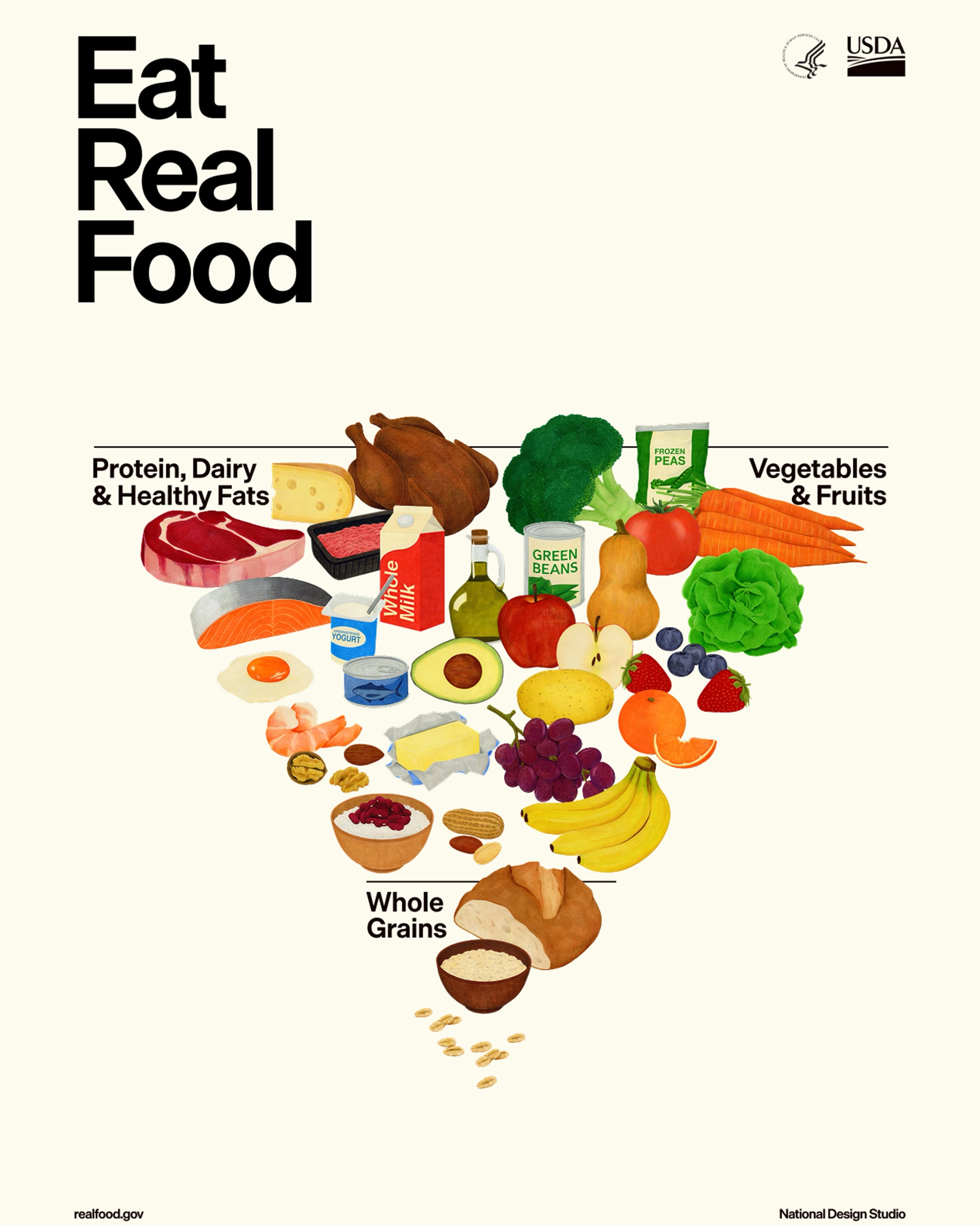
The Dietary Guidelines for Americans (DGA) 2025-2030 reframes U.S. nutrition advice around a simpler message: eat real food. The document emphasizes building meals from whole, nutrient-dense foods and sharply reducing highly processed foods.
- Core food groups emphasized: protein, dairy, vegetables, fruits, healthy fats, and whole grains.
- Strong push to reduce: refined carbohydrates, added sugars, excess sodium, unhealthy fats, and chemical additives commonly found in highly processed foods.
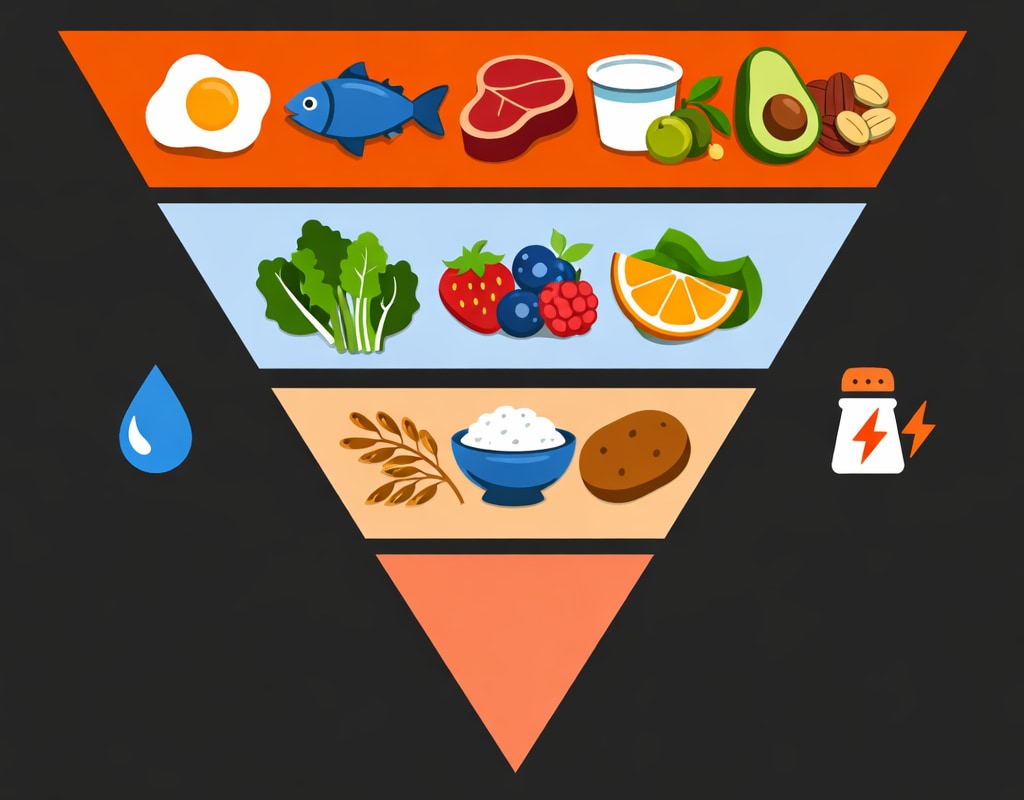
- A “food pyramid” graphic returns as a consumer-facing tool (replacing the MyPlate-style approach used in recent eras).
- Guidance is notably shorter than recent DGAs, with many details pushed to supporting materials and agency communications.
Why it matters: the DGA is used to shape federal nutrition policy and education materials, and it influences programs such as school meals and other federally supported food programs.
Quick numbers and non-negotiables

Key recommendations, by topic
1) Protein foods at every meal
The 2025-2030 DGA makes protein the “anchor” of most meals and includes a specific target range for daily intake.
- Eat a variety of protein foods from animal sources (eggs, poultry, seafood, red meat) and plant sources (beans/peas/lentils/legumes, nuts/seeds, soy).
- Use cooking methods like baked, broiled, roasted, stir-fried, or grilled instead of deep-fried.
- Choose meats with no or limited added sugars, refined carbohydrates/starches, or chemical additives; season with salt, spices, and herbs if desired.
- Protein target: 1.2-1.6 grams of protein per kilogram of body weight per day (adjust based on calorie needs and goals).
Quick protein calculator
Your target range (grams/day) = body weight (kg) × 1.2 to 1.6
Example: 70 kg person → 84 to 112 g protein/day
2) Dairy
Unlike the 2020-2025 DGA (which emphasized low-fat or fat-free dairy), the 2025-2030 DGA highlights full-fat dairy-specifically versions without added sugars.
- Choose full-fat dairy with no added sugars; the DGA describes dairy as a source of protein, fats, vitamins, and minerals.
- Dairy goal: 3 servings per day as part of a 2,000-calorie dietary pattern (adjust to your needs).
3) Vegetables and fruits
The guidance encourages vegetables and fruits throughout the day, prioritizing whole forms.
- Eat a variety of colorful, nutrient-dense vegetables and fruits.
- Prioritize whole forms; frozen/dried/canned options with no or very limited added sugars can also fit.
- Limit 100% juice portions (or dilute with water).
- Serving goals (2,000-calorie pattern): vegetables 3/day; fruits 2/day.
4) Healthy fats
The DGA promotes getting fats from whole foods and notes that more research is needed on which fats best support long-term health.
- Get fats from whole foods such as meats, poultry, eggs, omega-3-rich seafood, nuts, seeds, full-fat dairy, olives, and avocados.
- For cooking/adding fats: prioritize oils with essential fatty acids (example given: olive oil); other options listed include butter or beef tallow.
- Saturated fat: in general, keep it under 10% of total daily calories; limiting highly processed foods is framed as a way to help meet this goal.
5) Whole grains (and a sharper cut to refined carbs)
Whole grains stay in the pattern, but the guideline is more explicit about sharply reducing refined carbohydrates.
- Prioritize fiber-rich whole grains.
- Significantly reduce refined carbohydrates such as white bread, packaged breakfast options, flour tortillas, and crackers.
- Whole grain goal: 2-4 servings per day (adjust as needed).
6) Highly processed foods, additives, and added sugars
The DGA draws a bright line: avoid highly processed packaged foods that are salty or sweet, and reduce added sugars dramatically.
- Avoid highly processed salty/sweet packaged foods (examples given: chips, cookies, candy).
- Avoid sugar-sweetened beverages (examples given: sodas, fruit drinks, energy drinks).
- Limit foods and beverages with artificial flavors, petroleum-based dyes, artificial preservatives, and low-calorie non-nutritive sweeteners.
- Added sugar: no amount is recommended; one meal should contain no more than 10 grams of added sugar.
- Snack added-sugar limits reference FDA “Healthy” claim thresholds (examples given for grain and dairy snacks).
7) Sodium and alcohol
Two longstanding public-health targets remain in view (sodium and limiting alcohol), but the wording shifts in notable ways.
- Sodium: ages 14+ should consume under 2,300 mg/day; the guideline notes highly active people may benefit from increased sodium to offset sweat losses.
- Alcohol: “consume less alcohol for better overall health,” with a list of groups who should avoid alcohol completely.
8) Gut health and the microbiome
A short “gut health” section links diet quality, highly processed foods, and microbiome balance, and points to fiber-rich and fermented foods as supportive.
Special populations and life stages
The 2025-2030 DGA includes tailored guidance for infants and children, adolescents, pregnant and lactating women, older adults, people with chronic disease, and vegetarians/vegans. Below are a few high-impact updates.
Infants and toddlers
- For about the first 6 months: feed only breast milk (or iron-fortified infant formula when breast milk is not available).
- Continue breastfeeding for 2 years or beyond if mutually desired by parent and child.
- Vitamin D: many infants need a 400 IU/day supplement starting shortly after birth (per guideline text).
- If using infant formula: stop formula at 12 months and transition to whole milk.
Children, teens, adults, and older adults
- The “real food” framework is intended to be flexible and adjusted for age, sex, body size, and activity level.
- The guideline explicitly emphasizes hydration with water and unsweetened beverages.
- Alcohol guidance is phrased as “consume less,” rather than giving different numeric limits by sex.
What changed vs the 2020-2025 DGA
Compared with the 2020-2025 DGA, the 2025-2030 edition shifts tone, priorities, and (in several places) specificity. The table below highlights the biggest differences most readers will notice.

What experts are debating
Because the DGA influences policy and public messaging, changes in emphasis quickly become points of debate. A few themes have emerged in early reactions:
- Red meat and high-fat animal products: some experts are concerned that increased emphasis could raise saturated fat intake in practice.
- Salt seasoning: the guideline allows seasoning meat “with salt, spices, and herbs,” prompting concerns about sodium intake in a population already above targets.
- Whole-fat dairy: cardiology groups often prefer low-fat dairy for heart-health patterns, even while acknowledging dairy's nutritional value.
- Shorter, simpler guidelines: supporters like the clarity; critics worry about missing nuance and implementation details.
Example: American Heart Association statement (Jan 7, 2026)
The AHA welcomed recommendations to increase vegetables, fruits, and whole grains and to reduce added sugars and highly processed foods, but expressed concern that guidance on salt seasoning and red meat could lead people to exceed sodium and saturated-fat limits.
The AHA encourages low-fat/fat-free dairy and prioritizing plant proteins, seafood, and lean meats.
Sources
Primary links used to prepare this brief (all accessed January 2026):
- Dietary Guidelines for Americans, 2025-2030 (PDF): https://cdn.realfood.gov/DGA.pdf
- HHS press release (Jan 7, 2026): https://www.hhs.gov/press-room/historic-reset-federal-nutrition-policy.html
- USDA press release (Jan 7, 2026): https://www.usda.gov/about-usda/news/press-releases/2026/01/07/kennedy-rollins-unveil-historic-reset-us-nutrition-policy-put-real-food-back-center-health
- Dietary Guidelines for Americans 2020-2025 Executive Summary (PDF): https://www.dietaryguidelines.gov/sites/default/files/2020-12/DGA_2020-2025_ExecutiveSummary_English.pdf
- American Heart Association statement (Jan 7, 2026): https://newsroom.heart.org/news/releases-20260107-6915862
- CDC explainer on added sugars referencing the 2020-2025 DGA: https://www.cdc.gov/nutrition/php/data-research/added-sugars.html
HEALTH ANGEL • For educational use. Please attribute sources when publishing.