Fruit & Vegetable Stickers
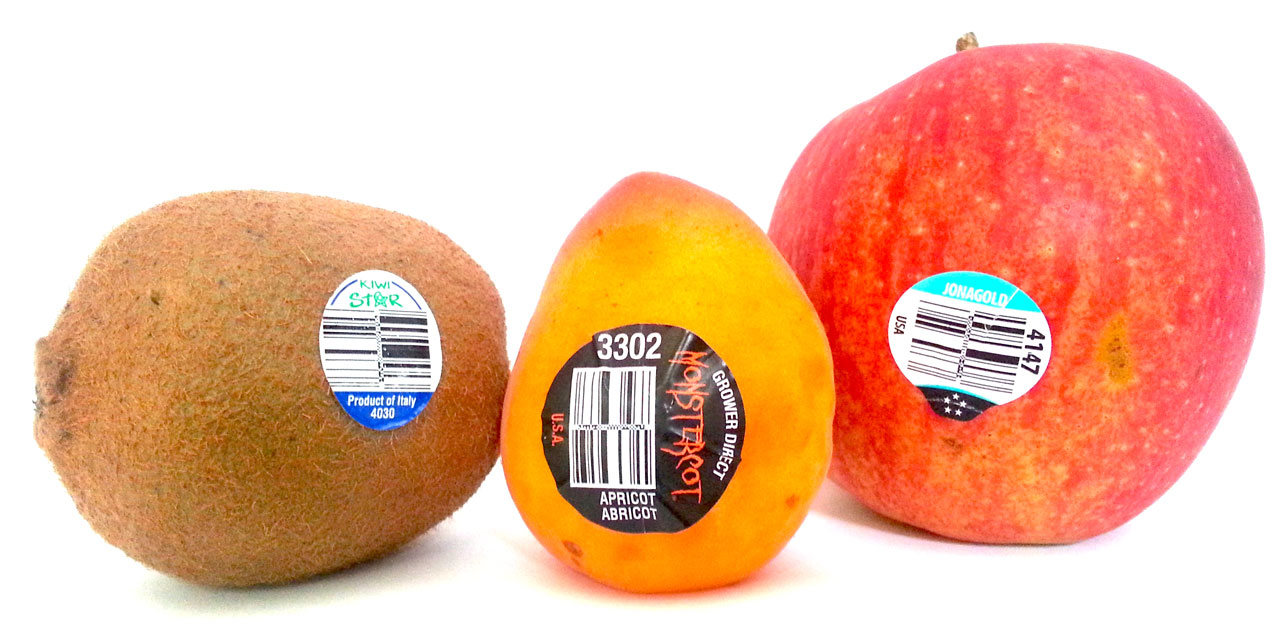
Do you know what the numbers on the sticky labels on fruits and vegetables mean? Did you ever think about it?
They are 4 or 5 digit numbers, based on the Price Look-Up code system (PLU), and they are helpful in letting us identify conventionally or organically grown, or genetically modified, produce.
PLU codes have been used by supermarkets since 1990, and there are currently over 1400 on the market. Their use is totally voluntary, so the manufacturers are unfortunately not obliged to label all produce.
4 digit PLUs, for example 3000 or 4000, identify conventionally (non-organic) grown produce.
A PLU that starts with the number 8 signifies that the produce has been genetically modified.
And 5 digit PLUs that start with the number 9 identify organically grown produce.
As consumers, I think it’s important that we give attention to this when we go shopping, and take our time to choose the correct produce. I also believe that we need to change our perception about organic produce.
Choosing organic produce is not always more expensive — and remember, the primary reason for buying organic produce is to be sure that we’re getting nutrient dense foods (high in micronutrients), and at the same time avoiding exposure to chemical pesticides. Choosing organic will also help support organic farmers, and the more people who buy it, the more it’s going to become available.
The Environmental Working Group (EWG) website www.ewg.org has some very helpful information on organic and non-organic foods.
They compile a “Dirty Dozen” list, with items that should only be bought as organic, to avoid pesticide and chemical exposure. These include strawberries, apples, nectarines, peaches, celery, grapes, cherries, spinach, tomatoes, bell peppers, cherry tomatoes and cucumber. When buying these items, you should be careful to choose ones with a PLU sticker beginning with a 9.
They also have the “Clean 15” list, which contains produce that it is generally safe to buy the non-organic version of. This includes avocados, sweet peas, grapefruits, onions, pineapples, cabbage, kiwi, eggplant, honeydew melon, cantaloupe melon and cauliflower.