
When Your Body Is Tired but Your Mind Is Wide Awake
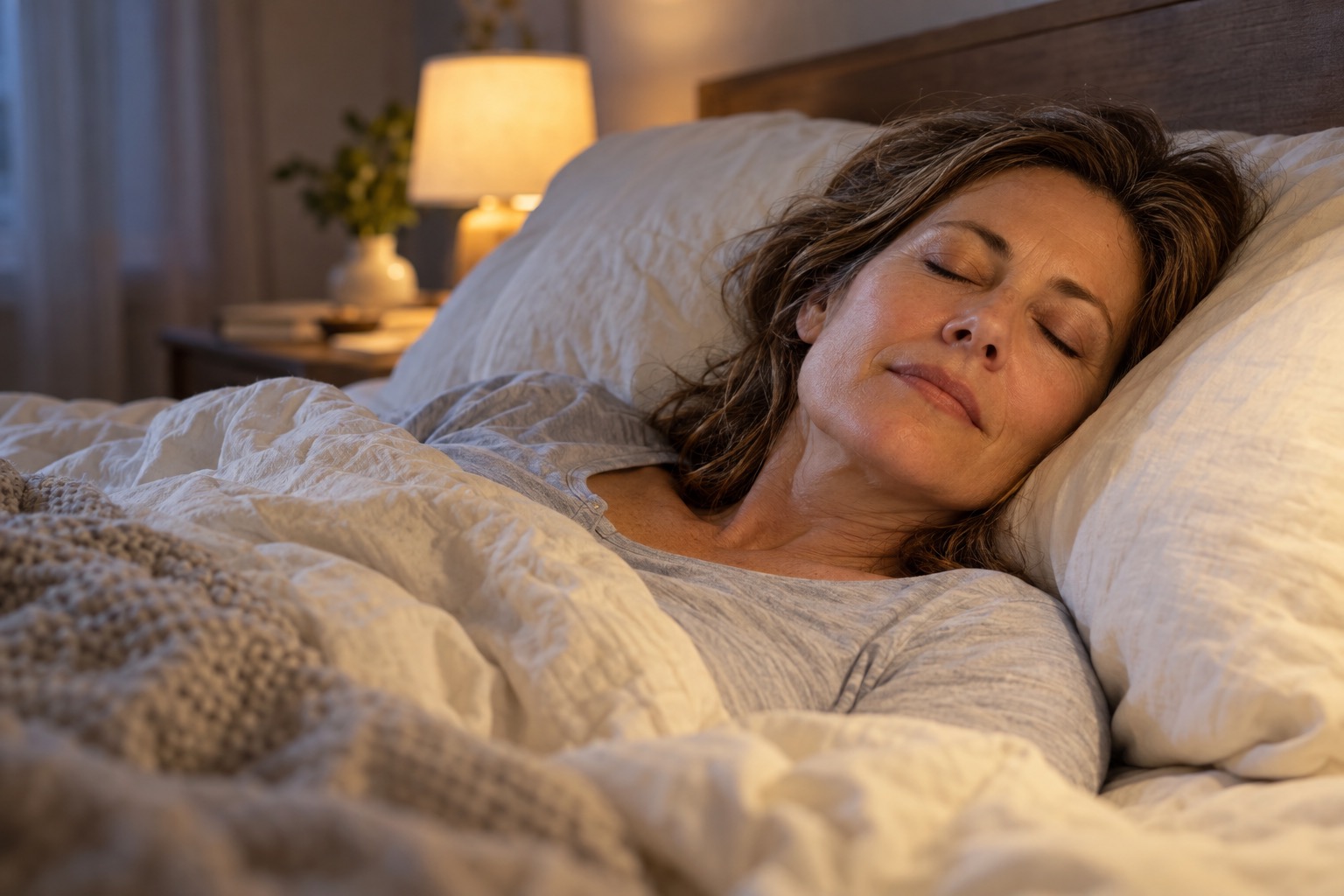
You have finally turned off the light. Your body is tired, but your mind has started working on tomorrow. An unfinished conversation returns, a small concern becomes a much larger one, then likely you look at the clock and begin calculating how little sleep you will get.
Unfortunately many people struggle with sleep, and I thought of them when I came across a video of neuroscientist Andrew Huberman describing an unusual bedtime exercise: moving your eyes slowly behind closed eyelids. It caught my attention because it sounded simple enough to try without buying anything. It also raised a question I care about as a coach: What does the science actually support?
In the video, Huberman describes looking from side to side, then up and down, making circles with the eyes, partially crossing them, and finishing with a long exhale. He suggests that this helps people lose awareness of their body position and drift into sleep, sometimes before completing the sequence.
I would approach that promise cautiously. Published research connects eye movements with sleep and brain activity, but I could not find a controlled clinical trial showing that this reliably puts people to sleep quickly. But it does leave room for curiosity, and it also gives us a useful opportunity to understand why a bedtime ritual might help, even when the explanation attached to it goes beyond the evidence.
Our eyes are part of a much larger communication within the nervous system. Even with the eyelids closed, moving them involves brain networks that help control movement and process spatial information. A 2008 brain-imaging study found different patterns of activity when participants made quick horizontal eye movements with their eyes open versus closed in darkness. Other research has measured the slow, rolling eye movements that occur naturally as people become drowsy. These movements accompany changes in electrical brain activity during the transition toward sleep. However, observing something during sleepiness does not prove that deliberately copying it will make us sleepy.
The claim about forgetting body position is also interesting. Proprioception is the sense that tells you where your limbs are without looking. For example, it allows you to know that your knee is bent while your eyes are closed. The evidence does not establish though that this exercise switches that sense off or that doing so is required for sleep.
One plausible explanation is that a gentle, repetitive task gives a busy mind something uncomplicated to follow. Attention may move away from tomorrow's problems and toward a quiet physical sensation.
The breathing deserves attention, too. Studies show that exhale-focused cyclic sighing improved mood and reduced breathing rate, although again it did not demonstrate significant improvements in its measured sleep outcomes. So feeling calmer can be worthwhile, but it does not guarantee sleep.
For anyone curious about the eye exercise, I would keep the experiment gentle. While lying comfortably, close your eyelids softly and make a few small, slow eye movements within an easy range. Take a comfortable breath and let the exhale leave without forcing it. Then allow your eyes to rest. This is a gentler adaptation, not a tested treatment. Avoid extreme positions or forceful eye crossing, and stop if you experience eye pain, headache, nausea or dizziness.
There is no need to keep repeating a routine until you get it "right." Bedtime already carries enough pressure for someone who struggles with sleep, although there are a few ordinary habits that deserve attention too. Keep your waking time reasonably consistent. Give yourself a quieter transition before bed, and consider whether afternoon or evening caffeine is contributing to the problem. If your mind keeps returning to unfinished tasks, write down tomorrow's priorities before getting into bed. You can return to them in the morning.
If you are lying awake and becoming frustrated, get up, if you can do so safely, and spend a little time on a quiet activity in dim light. Return to bed when you feel sleepy. Constantly checking the clock or repeatedly testing whether a technique is working can add to the strain.
Huberman also talks about prayer in the video. If prayer is meaningful to you, it may have a place in that quieter part of the evening. Someone else may prefer gentle music or a few pages of a familiar book. There is room for personal comfort without turning it into a universal prescription.
When sleep difficulties persist or interfere with daily life, speak with a health professional. Persistent insomnia often needs more than general bedtime advice. Cognitive behavioral therapy for insomnia, known as CBT-I, is a recommended first treatment for chronic insomnia. It addresses the thoughts and habits that can maintain the problem. Loud snoring, waking up gasping or significant daytime sleepiness also deserve medical attention.
As a coach, I want people to have practical tools they can use with confidence. That includes knowing when the evidence is limited and when more help is available. A small bedtime exercise may feel soothing. If it does not, you have not failed. Put it aside, choose something comfortable, and give yourself permission to seek support.
Research Sources
1. Video discussed. Andrew Huberman, Why I Pray When I Can’t Sleep. Exercise described at 1:48–2:07; claims checked against the research below. Source
2. Eye movements with closed eyelids. Hüfner et al. (2008). Differences in saccade-evoked brain activation patterns with eyes open or eyes closed in complete darkness. Experimental Brain Research, 186, 419–430. Imaging study, not a sleep treatment trial. Source
3. Natural eye movements during sleep onset. De Gennaro et al. (2000). Slow eye movements and EEG power spectra during wake-sleep transition. Clinical Neurophysiology, 111, 2107–2115. Observational physiology does not establish that imitation induces sleep. Source
4. Breathing study. Yilmaz Balban et al. (2023). Brief structured respiration practices enhance mood and reduce physiological arousal. Cell Reports Medicine, 4, 100895. The full paper and supplement report the sleep outcomes. Source
5. Insomnia treatment and CBT-I. National Heart, Lung, and Blood Institute. Insomnia Treatment. Supports CBT-I as an initial treatment, stimulus control and practical sleep habits. Source
6. Bedtime habits and worry. NHS. How to fall asleep faster and sleep better. Includes writing down worries, a calm bedtime routine and returning to bed when sleepy. Source
7. Clock watching and sleep anxiety. National Heart, Lung, and Blood Institute. Insomnia Causes and Risk Factors. Source
8. Symptoms requiring assessment. National Heart, Lung, and Blood Institute. Sleep Apnea Symptoms. Includes loud snoring, gasping and daytime sleepiness. Source